
Supreme Court Hits: The Greatest Hits of Civil Liberties

If the Constitution were an album, the Bill of Rights would be the original vinyl, and the Supreme Court would be the remixer. Over the past two centuries, the Court has spun some absolute bangers—interpretations of the Constitution that fundamentally shaped the way we live and what rights we can count on. From freedom of speech to the right to privacy, here’s a tour of some of the Supreme Court’s biggest civil liberties hits. These cases didn’t just drop the mic—they rewrote the script.
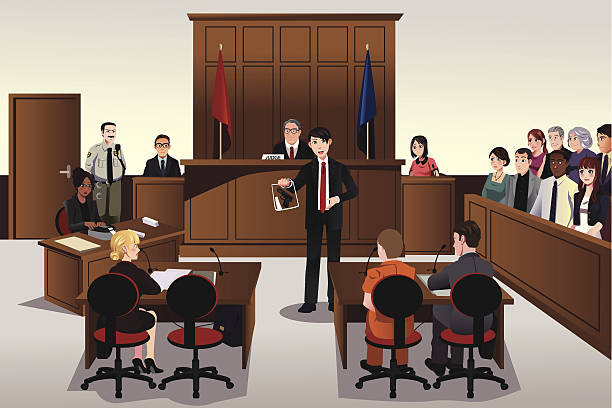
830+ Courtroom Clipart Stock Illustrations, Royalty-Free Vector Graphics & Clip  Art - iStock


Brown v. Board of Education (1954) – “Separate But Equal” Gets Canceled

Before this landmark decision, the idea that schools could be “separate but equal” was the law of the land, thanks to Plessy v. Ferguson (1896). Spoiler: they weren’t equal.

Then came Brown. In a unanimous decision, the Court ruled that racial segregation in public schools violated the Equal Protection Clause of the 14th Amendment. The opinion, delivered by Chief Justice Earl Warren, famously declared that “separate educational facilities are inherently unequal.”

Boom. Segregation was officially unconstitutional. It was a massive win for civil rights, and it lit the spark that fueled the civil rights movement of the 1960s. As legal remixes go, this one was a revolution.


Tinker v. Des Moines (1969) – Students Have Rights Too, Thank You Very Much

The Vietnam War was raging, and high school students in Des Moines, Iowa, decided to protest by wearing black armbands. The school said, “Take them off.” The students said, “See you in court.”

The Supreme Court sided with the students, famously saying, “It can hardly be argued that either students or teachers shed their constitutional rights to freedom of speech or expression at the schoolhouse gate.”

Translation: You don’t lose your First Amendment rights just because you’re in high school. Tinker gave every teenage rebel the constitutional mic—and the freedom to use it (as long as they’re not disrupting class too much).


Miranda v. Arizona (1966) – Say Hello to Your Rights

You’ve heard it a hundred times on TV: “You have the right to remain silent...” That’s thanks to Miranda v. Arizona. Before this ruling, confessions were often obtained without suspects knowing they had the right to remain silent or talk to a lawyer. Kind of important details, right?

Ernesto Miranda confessed to a crime without knowing those rights. The Court threw out the confession and created the now-famous “Miranda warnings.” If cops want to question you, they have to let you know you’re not just playing 20 Questions—you have rights.

This case didn’t just change law enforcement; it embedded itself in pop culture. Name another Supreme Court ruling with its own Law & Order intro.

Comments

Popular posts from this blog

The Bill of Rights—Now in Kid-Sized Portions

The Bill of Rights—Now in Kid-Sized Portions We talk a lot about the Constitution on this blog. But what if I told you your 10-year-old could understand it too? I'm excited to share that I’ve published a new book called 10 Rights Every Ten-Year-Old Should Know . It’s a short, accessible guide to the Bill of Rights , written specifically for kids—but honestly, adults can learn from it too. Why write a book like this? Because our rights shouldn’t feel like legal secrets. They’re for everyone. And that includes the next generation. The book breaks down each of the first ten amendments in plain language, connecting these core freedoms to situations kids might actually encounter—like school rules, protests, privacy, and more. It’s educational without being preachy, and it’s meant to spark questions, conversations, and curiosity. 📚 Self-published, yes. But not self-serving. This book is about empowering young minds to know what protections they have under the law—and why that matters. ...

Eight Amendment

  The Eighth Amendment: Protecting You from Cruel and Unusual Punishment When it comes to fairness and justice, the Eighth Amendment plays a major role in making sure the punishment fits the crime. While it might not always grab the headlines, it’s a critical part of ensuring that punishment in the U.S. is humane and proportional. Let’s explore why this amendment matters. What Does the Eighth Amendment Say? The Eighth Amendment reads: “Excessive bail shall not be required, nor excessive fines imposed, nor cruel and unusual punishments inflicted.” In simpler terms: The government can’t set unreasonably high bail amounts or fines. You can’t be subjected to cruel or unusual punishment. Why It’s So Crucial The Eighth Amendment is all about keeping things fair and humane, even when people are being punished for crimes. Here’s why it’s so important: No Excessive Bail or Fines : The Eighth Amendment prevents the government from charging unfairly high bail or fines. It ensures that people ...

Privacy in the Digital Age: Your Data, Your Rights

Because your phone knows more about you than your best friend—and that’s kinda weird. Let’s be honest: if the Founding Fathers saw us asking Alexa to play our guilty pleasure playlists while TikTok tracks our every blink, they’d probably assume the British finally won. We live in a world where our location, browsing habits, and conversations are collected, stored, and sometimes sold faster than you can say “accept cookies.” So the question becomes: what do our constitutional rights—especially that old Fourth Amendment—say about all this? Can a document written with quills and powdered wigs really protect us from Google, iPhones, and government surveillance drones? Turns out... it can. Sort of. Let’s talk about it. The Fourth Amendment: Your OG Privacy Shield You probably remember this one from civics class—or Law & Order reruns: "The right of the people to be secure in their persons, houses, papers, and effects, against unreasonable searches and seizures..." Back in 1791,...