Because sometimes the line between church and state is thinner than communion wafers.
Ah, religion in America. It's one of those topics that can bring people together—or start a Thanksgiving food fight faster than you can say “pass the stuffing.” And when it comes to public life—schools, government, protests, politics—it gets even spicier.
Can you pray at a football game? Put up a Ten Commandments statue at city hall? Start a Satan Club at a public school? (Yes, actually—but we’ll get to that.)
The First Amendment gives us two major protections: freedom of religion and freedom from government-imposed religion. It’s a balancing act, and the courts have spent centuries trying not to fall off the metaphorical beam.
Let’s break down where the line is (usually), when it gets blurry, and why it matters that we keep asking.
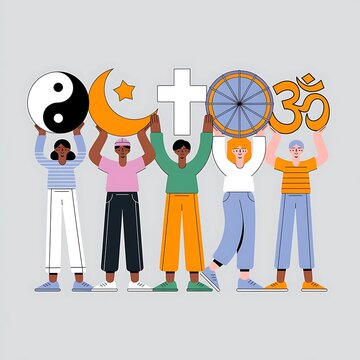
🧱 The Wall Between Church and State (Sort of)
Let’s start with the basics. The First Amendment says:
“Congress shall make no law respecting an establishment of religion, or prohibiting the free exercise thereof…”
That first part is the Establishment Clause: no official religion, no government-sponsored theology, no Bible-as-textbook situations.
The second part is the Free Exercise Clause: believe what you want, worship (or don’t), wear religious clothing, observe holidays—without the government stepping in.
Thomas Jefferson famously described this as building “a wall of separation between Church and State.” But if it’s a wall, it’s got a lot of open windows and lawyers peeking through.
📚 Prayers in Public Schools: A Classic Controversy
Let’s talk about one of the juiciest battles: prayer in public schools.
Back in 1962, the Supreme Court ruled in Engel v. Vitale that even voluntary, nondenominational prayer led by school officials violated the Establishment Clause. Why? Because public schools are government-funded. And government-sponsored prayer = no-no.
But here’s the catch: students can still pray. On their own. With friends. Quietly or out loud, as long as it doesn’t disrupt class. What schools can’t do is require it or lead it. Your personal faith? Protected. A principal with a megaphone and a Bible verse? Not so much.
🏈 Coach Kennedy and the 50-Yard-Line Prayer
Fast forward to 2022. A high school football coach named Joe Kennedy got attention for praying on the field after games. The school district told him to stop—concerned it looked like a school-endorsed religious practice. He refused, lost his job, and sued.
Enter the Supreme Court.
In Kennedy v. Bremerton School District, the Court ruled 6–3 in favor of the coach, saying his prayer was private, not coercive, and protected under free exercise. Critics argued it blurred that church-state line, but the ruling signaled a shift: the Court’s now more inclined to give religious expression in public settings the benefit of the doubt.
Moral of the story? We’re still very much figuring this out.
🪧 Protests, Faith, and the Public Square
Religion isn’t just about where you pray—it’s also why some people protest.
From civil rights marches led by pastors to modern protests against abortion, climate change, and war, religious beliefs often fuel public activism. And guess what? That’s totally constitutional.
You can:
March for causes rooted in your faith
Hold a Bible or Quran while giving a speech
Use a religious framework to challenge government action
What you can’t do? Use your faith to break neutral laws (usually). Like, you can’t skip paying taxes just because you tithe. And your boss doesn’t have to give you every feast day off unless reasonable accommodation applies.
But generally, the government can’t ban your protest just because it's religious. That’s double First Amendment protection: free speech and free exercise.
🏛️ Ten Commandments at City Hall? It Depends.
This one's a hot potato. Can government buildings display religious symbols?
Answer: It depends. (Welcome to Constitutional Law, where “maybe” is the default.)
In some cases, like Van Orden v. Perry (2005), the Court allowed a Ten Commandments monument because it was part of a larger historical display—not pushing religion specifically. But in McCreary County v. ACLU (same year!), the Court said no to a similar display because the intent was clearly religious.
So if you’re decorating your courtroom and want to stay out of legal trouble, maybe stick to portraits of George Washington.
🧛♂️ What About Satan Clubs?
Yes, this is real.
When public schools allow religious groups—like Bible study clubs—they legally have to allow all religions the same access. That includes the After School Satan Club (run by The Satanic Temple, which is more into civic engagement than actual devil worship).
It’s weird. It’s controversial. It’s also a brilliant example of what real religious freedom looks like: equal access for everyone, not just the mainstream.
✝️ Religion in the Pledge? In God We Trust?
You may have heard the Pledge of Allegiance includes “under God”—added during the Cold War in 1954 to stick it to those godless Communists.
Courts have generally ruled that this is more “ceremonial deism” (their term, not mine) than a forced prayer. Same with “In God We Trust” on your money. The idea is that it’s tradition, not coercion.
Still, people challenge these phrases from time to time. And honestly, the fact that we keep asking questions about them? That’s democracy in action, baby.
🧠 Final Thoughts: A Country of Many Faiths—and No Faith
Religion in public life isn’t a yes-or-no question. It’s a how much question. The Constitution doesn’t ask the government to be atheist—it asks it to be neutral. It protects your right to worship—and your right not to.
So whether you’re praying quietly, protesting loudly, or just trying to avoid jury duty during Yom Kippur, the First Amendment has your back. Just remember: it’s not about keeping faith out of public life—it’s about making sure the government doesn’t pick sides.
And that? That’s the kind of messy, beautiful freedom we can all believe in.
Comments
Post a Comment