
Tenth Amendment

The Tenth Amendment: States vs. Uncle Sam

The Constitution’s Tenth Amendment is all about setting boundaries. It’s not flashy, but it’s foundational to how power is divvied up in the U.S. Let’s dive into what it says and why it matters.
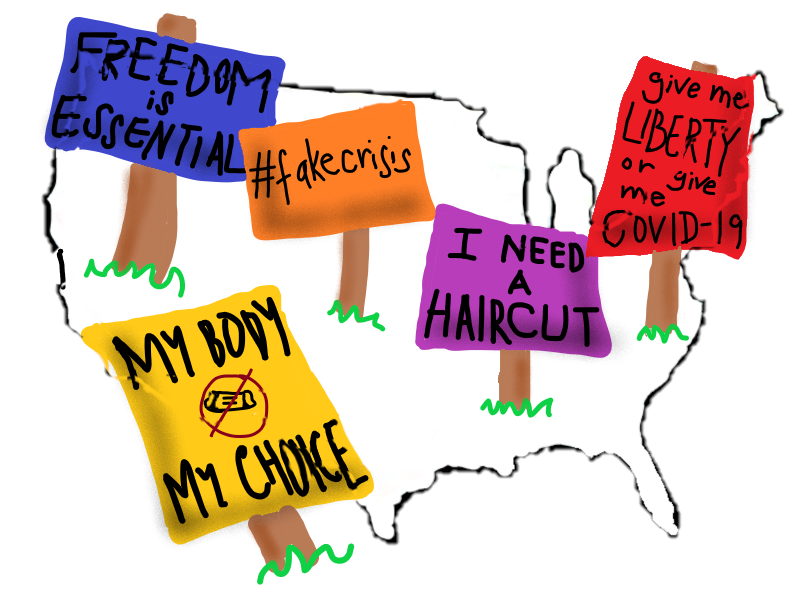
Opinion: Quarantine Protesters are Reckless – Marquette Messenger

The Tenth Amendment states: “The powers not delegated to the United States by the Constitution, nor prohibited by it to the States, are reserved to the States respectively, or to the people.”

This amendment is  all about dividing power between the federal government and the states. The gist is simple: if the Constitution doesn’t give a specific power to the federal government, and it’s not explicitly denied to the states, then the states or the people get to call the shots.

Mini Lesson on Federalism: Federalism is the separation of powers between state and federal government. In the very first constitution (the Articles of Confederation), almost all of the power was given to the individual states while little-to-no power was given to the federal government. This caused chaos as well as debt and threatened to ruin this nation. While the word “federalism” may not appear in the Constitution, the principle of federalism is what allowed the U.S. to stay away from the unitary type of government they were under in Britain while still forcing all states to stay in line. 

The Tenth Amendment is the cornerstone of federalism. It’s why states can have their own laws about things like education, marriage, and local taxes. It’s also a frequent flier in court cases where states and the federal government butt heads—think marijuana legalization, gun control, and environmental regulations. It’s the constitutional equivalent of, “Mind your business, Washington.”

Landmark Case: Bond v. United States (2014) This Tenth Amendment case involved a woman who used toxic chemicals to get back at a friend (not her finest moment). The federal government charged her under an international treaty, but the Supreme Court ruled that this was overreach. It was a win for states’ rights and a reminder that the Tenth Amendment still has bite.

The Controversy: The Tenth Amendment fuels ongoing battles over how much power the federal government should have versus the states. It’s a tug-of-war with no end in sight, and every time there’s a new issue—whether it’s healthcare, immigration, or environmental policy—the Tenth Amendment is there, quietly stirring the pot.

What Does It All Mean for You? The Tenth Amendment might not grab headlines, but it’s the backbone of how America balances power. It reminds us that the federal government doesn’t hold all the cards—states and the people have a say, too. Whether you’re team “federal power” or rooting for the states, this amendment shapes how the game is played.

Comments

Popular posts from this blog

The Bill of Rights—Now in Kid-Sized Portions

The Bill of Rights—Now in Kid-Sized Portions We talk a lot about the Constitution on this blog. But what if I told you your 10-year-old could understand it too? I'm excited to share that I’ve published a new book called 10 Rights Every Ten-Year-Old Should Know . It’s a short, accessible guide to the Bill of Rights , written specifically for kids—but honestly, adults can learn from it too. Why write a book like this? Because our rights shouldn’t feel like legal secrets. They’re for everyone. And that includes the next generation. The book breaks down each of the first ten amendments in plain language, connecting these core freedoms to situations kids might actually encounter—like school rules, protests, privacy, and more. It’s educational without being preachy, and it’s meant to spark questions, conversations, and curiosity. 📚 Self-published, yes. But not self-serving. This book is about empowering young minds to know what protections they have under the law—and why that matters. ...

Privacy in the Digital Age: Your Data, Your Rights

Because your phone knows more about you than your best friend—and that’s kinda weird. Let’s be honest: if the Founding Fathers saw us asking Alexa to play our guilty pleasure playlists while TikTok tracks our every blink, they’d probably assume the British finally won. We live in a world where our location, browsing habits, and conversations are collected, stored, and sometimes sold faster than you can say “accept cookies.” So the question becomes: what do our constitutional rights—especially that old Fourth Amendment—say about all this? Can a document written with quills and powdered wigs really protect us from Google, iPhones, and government surveillance drones? Turns out... it can. Sort of. Let’s talk about it. The Fourth Amendment: Your OG Privacy Shield You probably remember this one from civics class—or Law & Order reruns: "The right of the people to be secure in their persons, houses, papers, and effects, against unreasonable searches and seizures..." Back in 1791,...

Juneteenth: Freedom Delayed, Freedom Celebrated

Because if America were a group project, someone definitely forgot to hit “send.” Let’s talk about Juneteenth. You may know it as a federal holiday, a cookout staple, or maybe the day Target puts all their red, black, and green merch on display. But Juneteenth is more than a hashtag or a long weekend—it’s one of the most powerful, poignant, and  very human  chapters in America’s ongoing story of freedom. So let’s break it down: what happened, why it still matters, and how a two-and-a-half-year delay turned into a day of joy, reflection, and (yes) barbecue. June 19, 1865: Better Late Than Never Here’s the headline: Juneteenth marks the day  enslaved people in Galveston, Texas were finally told they were free —a full two and a half years after the Emancipation Proclamation was signed by Abraham Lincoln. Let that sink in. Imagine someone tells you your student loans were forgiven... 30 months ago... and you’ve still been paying them this whole time. Now crank the stakes up t...